Structural Drying and Dehumidification in Schertz, TX
Surfaces dry long before the materials inside them. The drying team sets air movers and LGR or desiccant dehumidifiers for the class of loss and logs readings daily until the structure matches a dry reference.
(888) 926-4485Start drying to a dry reference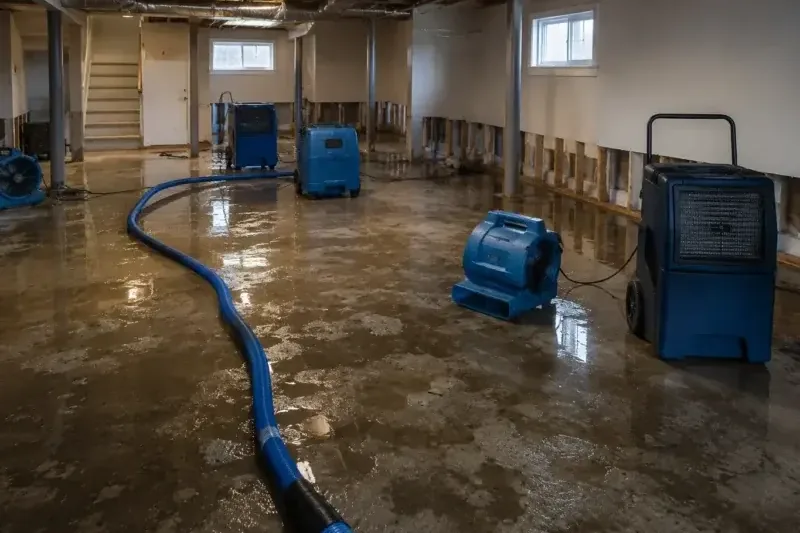
What each dry-out includes
Dispatch at any hour
The response team runs 24/7, and active water is treated as urgent on nights, weekends and holidays.
IICRC S500 drying
Air movers and LGR dehumidifiers are sized to the class of loss, and materials dry to within 2 to 4 points of a dry reference.
A claim file from the first visit
Moisture maps, daily psychrometric logs and timestamped photos taken before demolition go to the adjuster.
Built for slab homes
Clay soil, slab plumbing, attic water heaters and attic AC units are checked on every walkthrough.
First moves for structural drying and dehumidification
- Remove standing water first
Extraction comes before drying.
- Keep the AC running
Cooler, drier air helps, unless the AC caused the leak.
- Leave the equipment on
Air movers and dehumidifiers run around the clock.
- Leave the readings to the tech
Daily checks decide when it is done.
What does structural drying and dehumidification cost in Schertz, TX?
Structural drying in Schertz typically runs about $1,000 to $6,000, depending on the wet square footage, the class of loss and how many equipment days the readings call for. Concrete and hardwood take the longest.
Class 1 or 2, one area
- Air movers
- LGR dehumidifier
- Daily readings
Several rooms
- Containment
- Multiple dehumidifiers
- Cavity drying
Class 4, slab or hardwood
- Desiccant drying
- Floor drying mats
- Extended monitoring
Ranges are typical, not a quote: water category, square footage, material class and how fast drying started move the number most. The water damage cost calculator gives a closer range.
How structural drying and dehumidification is handled in Schertz
Set the dry reference
Read unaffected material in the home.
Place equipment
Air movers and dehumidifiers sized to the class.
Log daily
Psychrometric readings in every wet room.
Pull equipment on readings
Out only when materials match dry.
Structural drying removes the water held inside building materials: framing, subfloor, drywall, hardwood and the concrete slab most local homes sit on. It follows water extraction on almost every loss. The goal is not a floor that feels dry but materials that read within 2 to 4 points of a dry reference taken from unaffected material in the same home.
How the drying plan is set
The class of loss sets the plan. Class 1 is a small area with little absorbed water; Class 4 means dense materials like concrete or hardwood that hold water deep. The tech sizes air movers and dehumidifier capacity from the wet square footage and the class, then adjusts daily from the readings. A slab leak is a classic Class 4 job.
Wet framing or a damp slab? The drying team sets equipment 24/7.
(888) 926-4485Book a moisture-mapped dry-outEquipment that does the work
- Air movers push dry air across wet surfaces
- LGR dehumidifiers pull water vapor out of the air
- Desiccant dehumidifiers handle slabs and hardwood
- Containment concentrates drying in the wet rooms
Find the main shut-off now
Locate the main water valve before a leak and check that it turns freely. Closing it early is the cheapest way to limit water damage.
Proof that it is dry
Daily psychrometric logs record temperature, humidity and moisture readings in every wet room. Equipment comes out when the readings match the dry reference, and the final readings go into the claim file. The EPA indoor air quality pages explain why moisture control matters, and Ready.gov covers flood recovery.
Structural drying and dehumidification across Schertz and nearby towns
Coverage runs day or night, weekends and holidays included.
The response team covers ZIP 78154, from old Main Street and the FM 3009 corridor out to Savannah Square, Carolina Crossing, Northcliffe, Belmont Park, Rhine Valley and The Crossvine.
Nearby coverage reaches Universal City, Cibolo, Converse, Selma, Live Oak and Garden Ridge.
See every neighborhood and nearby city coveredRelated water damage services
Structural Drying and Dehumidification questions, answered
Water still moving?
Wet framing or a damp slab? The drying team sets equipment 24/7.
(888) 926-4485 Book a moisture-mapped dry-outHow long does structural drying take?
Most Class 1 and 2 losses dry in three to five days. Class 4 materials like concrete and hardwood can take a week or more.
Why can't the drying equipment come out when it feels dry?
Framing, subfloor and drywall hold water after surfaces feel dry. Readings decide, so equipment stays until materials match the dry reference.
Why is structural drying equipment so loud and warm?
Air movers and dehumidifiers run constantly and give off heat, which speeds evaporation. The noise is part of the process.
What does 2 to 4 points of dry mean?
Moisture meters read the wet material and a dry reference of the same material. Drying is done when the wet reading is within 2 to 4 points of the reference.
Is structural drying covered by insurance?
When the water loss itself is covered, drying is usually part of the claim. The daily logs show the adjuster why each equipment day was needed. Check your own policy.
Floors still damp days later? Get the structure dried properly.
Materials hold water long after surfaces feel dry. The drying team measures it and keeps going until readings say dry.
(888) 926-4485Get the hidden moisture out