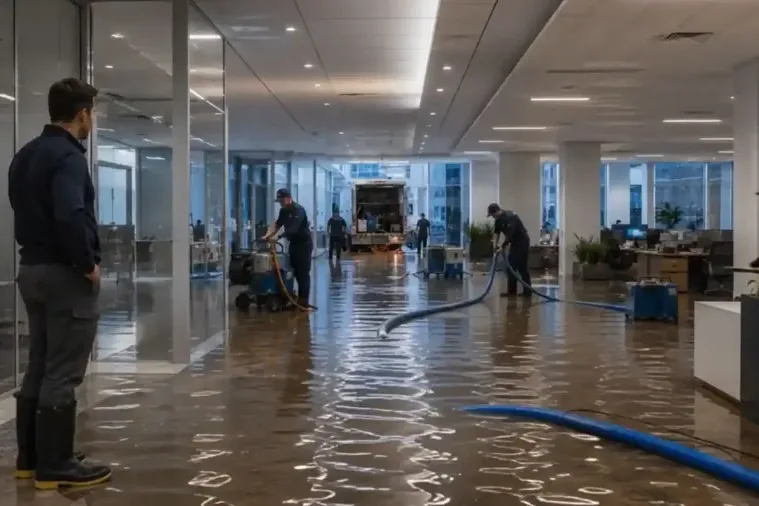
Pat Booker Road, State Highway 218, is the main corridor and commercial thoroughfare of Universal City, so shops and offices along it are the typical commercial water losses. For an owner, the question after a leak is how to protect stock and keep the doors open.
Key takeaways
- Stop the water, protect stock and records, and photograph everything before anything is moved.
- Phased drying lets part of the business keep operating while another part is dried.
- Water travels through shared walls and ceilings, so neighbors and the landlord need to know early.
- Moisture readings, not appearance, decide when each area is done.
- A written record of the loss helps with the insurer and the landlord.
The first day: stop, protect, document
A commercial leak does not wait for a quiet weekend. A pipe, a roof or a sprinkler head can pour water onto a sales floor or into a back office.
The first steps are the same as in a home, with a few additions for stock and records.
The source decides the category. A supply pipe starts clean, a roof leak carries debris and a drain backup carries sewage, so the crew identifies the source before the drying plan is set.
- Shut off the water at the main valve or the riser.
- Switch off power to wet areas if the panel is dry and safe to reach.
- Photograph every wet area, the source and the damaged items.
- Move stock and records out of the wet zone onto dry shelves.
- Notify the landlord or property manager and the insurer.
Protecting stock, equipment and records
Inventory is often the largest loss in a small business. Elevating it quickly saves more than any later cleanup.
Paper records, computers and point of sale equipment need attention first. Water and humidity both do damage, and data can be lost even when the machine looks dry.
Sorting matters for the claim. Keep damaged stock where an adjuster can see it, with photographs, until the insurer says it can be discarded.
- Lift boxes off the floor and onto racks or tables.
- Cover shelving that sits under a leaking ceiling with plastic.
- Unplug computers and electronics that are near the water.
- Photograph inventory before it is moved so counts can be proved later.
- Set aside damaged stock with a tag and a photograph so counts match the claim.
Phased drying that keeps doors open
A restoration plan for a business is built around operations. The crew dries one zone while another keeps working, using barriers, quiet equipment placement and a schedule agreed with the owner.
That approach limits lost sales and lets the business keep serving customers where it is safe.
A note on the door and a word to regular customers explain the work. People accept a few fans and a closed corner far more easily when they know why.
How phases are set
The crew maps the wet areas with a moisture meter and a thermal camera. Then it divides the space into zones and sets the order.
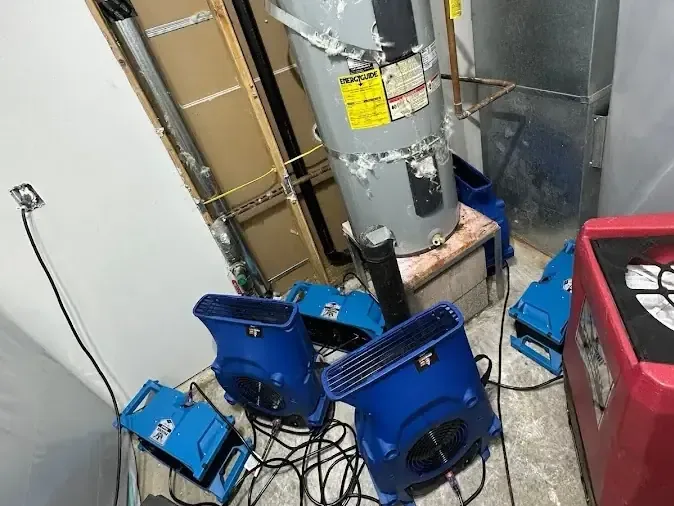
Equipment draws power from the circuits the business uses, so the crew checks the load before plugging in. Separate circuits or a quiet schedule keep registers, coolers and lights running.
- Closest to the source and wettest areas are dried first.
- Barriers keep dust and noise away from open areas.
- Equipment is moved as zones reach the dry reference.
Working around customers
Cords and hoses are routed to avoid walkways. Equipment is placed against walls where possible, and signs mark any wet floor that remains.
Shared walls and neighboring spaces
Water does not stop at a lease boundary. A leak in one unit can run through a shared wall or down through a ceiling into the next.
Early notice protects everyone. It also helps establish which insurer and which party handles each part of the loss.
Improvements a tenant installed, such as flooring or ceiling work, may belong to the tenant, while the shell belongs to the landlord. That split decides who pays for which repair.
- Tell the landlord or property manager immediately.
- Tell neighboring tenants if water may have crossed a wall.
- Ask the landlord who owns repairs to the shared structure.
- Keep a written record of every conversation.
Floors, walls and ceilings
Finishes in a shop vary, and each one dries differently. The crew checks every layer, not just the surface.
Floors
Carpet tile can often be lifted, dried and relaid, while glued vinyl and laminate trap water underneath. Concrete under any covering needs readings before the floor goes back.
Walls and ceilings
Wet drywall hides wet insulation and framing. Suspended ceiling tiles that sagged are replaced, and the grid and everything above are dried.
Lights and fixtures
Light fixtures under a wet ceiling are shut off and checked by an electrician before they are used again. Water inside a fixture is a shock risk even after the ceiling looks dry.
Records for the business policy
A commercial policy has its own terms. Ask the insurer whether it includes business income coverage and what it needs to see.
The restoration team's readings, photographs and equipment logs support the claim.
Ask whether the policy treats equipment, stock, improvements and income as separate items, because each often has its own limit. A single folder holding the photographs, lists and invoices saves effort when the adjuster asks for them.
- Photographs of the loss and the damaged stock.
- An inventory list with values.
- The restoration plan and moisture readings.
- Invoices for repairs and any temporary measures.
Planning ahead
A little preparation makes the next leak smaller. Knowing where the shutoff sits and keeping stock off the floor go a long way.
The Universal City commercial water damage pages and structural drying pages describe the work in detail, and the commercial water damage overview covers the wider area. The Universal City water damage pages list every service.
- Test the main shutoff and make sure staff know where it is.
- Keep stock on shelves, not the floor, in back rooms.
- Look at the roof and drains each season.
- Keep an emergency contact list at the register.
Questions
Can a shop stay open during drying?
Often yes. Phased drying and barriers let part of the business operate while another part is dried, depending on the size and location of the loss.
What should be moved first?
Records, electronics and high-value stock. Then lift remaining inventory off the floor.
Who is responsible for repairs, the tenant or the landlord?
The lease decides. Tenants usually cover contents and improvements they made, and landlords cover the building, so both should read the lease.
How do I know each area is dry?
Moisture readings against a dry reference. The crew logs the readings at every visit and removes equipment when the numbers match.
Does a business policy cover lost income?
Some do, as business income coverage. Ask the insurer what the policy includes and what proof is needed.
What if a loss happens after closing time?
Shut off the water if it is safe, secure the building and photograph the damage. Water keeps damaging materials until extraction starts, so calling that same night shortens the loss.