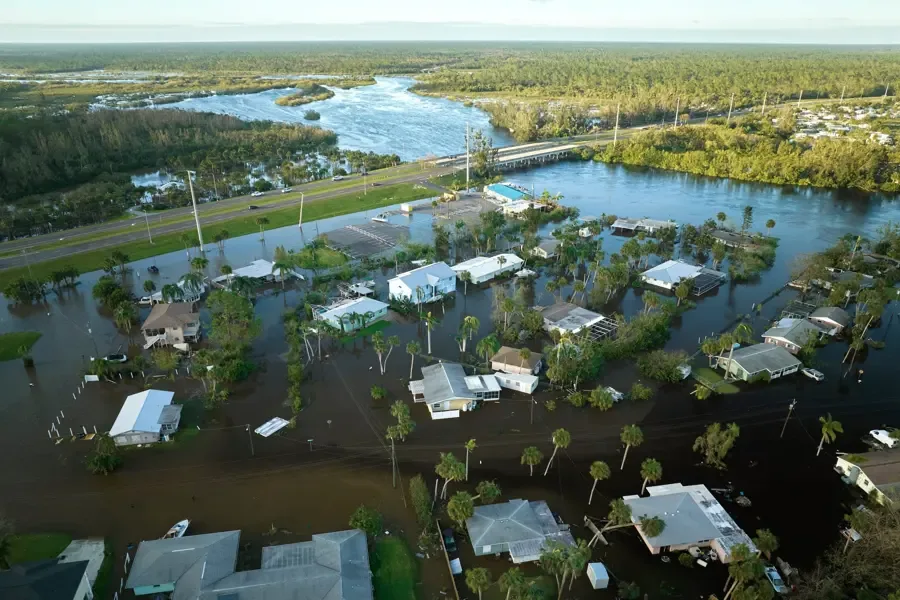
On May 30, 2025, a flash flood warning for the San Antonio area named Universal City among the cities where flash flooding should be expected. A warning like that is the moment when storm water in a house stops being a distant risk, and the steps taken in the first day shape the whole repair.
Key takeaways
- A flash flood warning means flooding is happening or about to happen, so move people and valuables upward first.
- Water that enters from the street or yard is Category 3 and is not safe to wade in or to wipe up by hand.
- Do not touch wet outlets, the panel or appliances standing in water.
- Owners and renters both need photographs and written notice, and they go to different people.
- Extraction and removal come before drying, and the drying is finished by readings.
What a flash flood warning means for a house
A watch says conditions could produce flooding. A warning says it is under way or about to be, and water can rise in a driveway, garage or low doorway faster than a household can react.
Universal City covers 5.7 square miles, and the May 30, 2025 warning named it by name. That is a reminder that a compact suburb can see fast runoff off roofs, streets and parking areas.
Garage doors, low thresholds and back doors are the usual first entry points, so those are the first places to check once the rain eases. Water can also come up through floor drains when the street drains are full.
- Move people, pets, medications and papers to the highest dry part of the house.
- Shut off power at the panel only if the panel is dry and can be reached without standing in water.
- Keep vehicles and children away from moving water in the street.
- Do not return to a room with standing water until the power question is settled.
Why storm water inside a house is Category 3
Water that comes in from a street, yard or drain has crossed pavement, soil and gutters before it reaches the floor. It collects oil, fertilizer, animal waste and sometimes sewage from backed-up drains.
Under IICRC S500 that makes it Category 3. The label is about what the water has touched, not how long it has been there.
What that means for belongings
Hard, nonporous items such as glass, metal and sealed plastic can be cleaned. Cardboard, upholstered furniture, mattresses and carpet pad are usually discarded.
Owners and renters: who does what
The Census owner-occupied rate in Universal City was 57.5 percent for 2020 to 2024, so a large share of homes are not owner-occupied. That makes it likely that a flooded house is a rental, and the steps differ a little.
Both groups should photograph everything and keep a written record. After that the paths split.
- Owners notify the insurer and ask in writing how the policy treats flood or storm water.
- Renters send the landlord written notice, with photographs, right away.
- Renters also check whether a renter's policy covers belongings damaged by flood.
- Landlords arrange extraction and repairs to the structure, and may call a restoration team directly.
The first day: steps that protect the house
Once the water has stopped rising and the power is safe, the goal is to get standing water out and wet material away from the walls. Delay lets water wick up drywall and soak into flooring layers.
Photographs come first, then the cleanup begins.
A slow video walk through each room shows water marks and damage better than a few stills. Narrate what each room held before the water came in.
- Photograph the water level marks, the rooms and the damaged items.
- Wear waterproof boots and gloves, and avoid skin contact with the water.
- Carry out rugs, bedding and clothing that sat in the water for washing or disposal.
- Open the house to air only if it does not let in more rain.
- Call a restoration team to start extraction and set drying equipment.
- Keep soaked mattresses and upholstered furniture outside, since they keep releasing moisture into the air.
Extraction and removal
Extraction crews use truck-mounted units or portable pumps to remove standing water, then lift the water held in carpet and pad. Pad that sat in storm water is removed.
The crew then checks walls with a moisture meter. Drywall that wicked water above the floor is cut away at a height where the reading turns dry.
Floors
Tile and sealed concrete are cleaned and dried in place. Laminate, hardwood and vinyl plank are often lifted, because water collects underneath.
Walls and cabinets
Cabinet bases that sat in water are checked for swelling. Wall cavities are opened so insulation can be removed and the framing can air out.
Door casings and baseboards swell and are checked as well. Outlets in walls that stood in water need an electrician to inspect them before the circuit is restored.
Drying and the final check
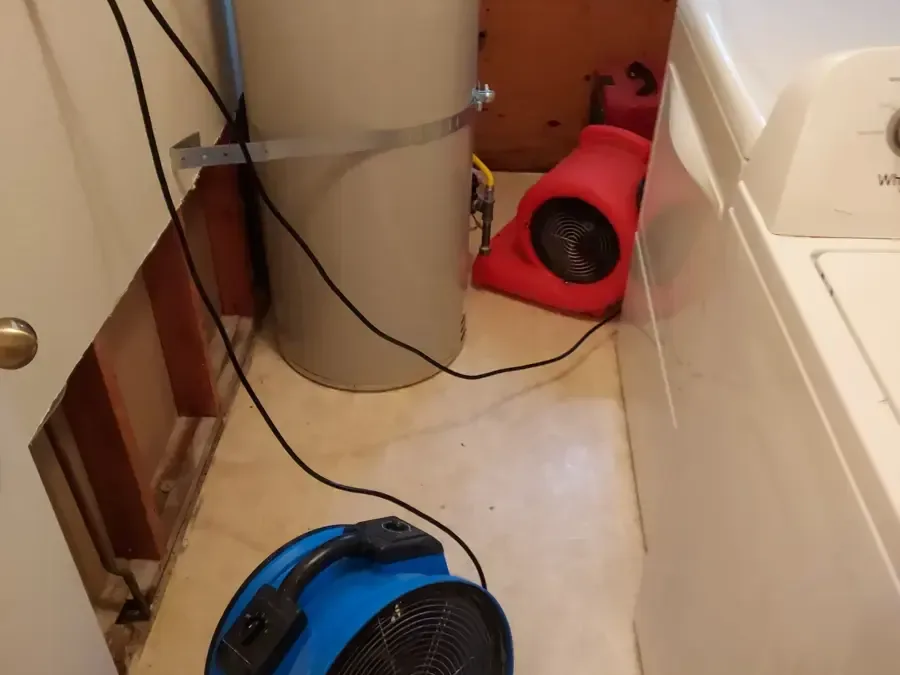
After removal, dehumidifiers and air movers dry the structure. Readings on the framing, subfloor and concrete set how long they run.
The job finishes when those readings fall to the dry reference. Leaving wet material behind invites mold, which is why surfaces that feel dry are not the test.
Drying equipment is loud and warm, and it runs around the clock for several days. The crew explains where cords and hoses run so the household can move around safely.
- Daily readings are logged on a floor plan.
- Equipment is repositioned as wet spots change.
- A final set of readings confirms the structure is dry before rebuilding starts.
Getting ready before the next warning
A few habits cut the cost of a flood. Clearing gutters and downspouts, keeping valuables off the floor and knowing where the main water valve sits all help.
For the specifics of the work itself, the Universal City storm water cleanup and water extraction pages describe each stage, and the Universal City water damage pages list every service. The structural drying page covers the drying side in detail.
Questions
Does a flash flood warning mean my house will flood?
No. It means flash flooding is occurring or expected in the area. Some homes see nothing, and others see water at a doorway or in a garage.
Can I wipe up storm water myself?
A small amount on a hard floor can be handled with gloves and boots, but any water that came from outside is Category 3 and should be treated as contaminated. Large amounts or water in carpet need a restoration team.
Who pays for storm water cleanup?
That depends on the policy. Many homeowner's policies exclude flood, and flood coverage is a separate policy. Renters should ask the landlord and check any renter's policy.
How soon should drying start?
As early as the power is safe and the water is out. Wet drywall and insulation do not recover after days of sitting wet, so early extraction keeps more material.
What should be photographed?
Every room, the water marks on walls, the damaged belongings and the equipment placed by the crew. Keep the originals with dates.
Do I have to leave the house while it dries?
Often not, though rooms with removal work in progress are sealed off. Households with large losses sometimes move out for a few days, and the crew explains which rooms are safe to use.