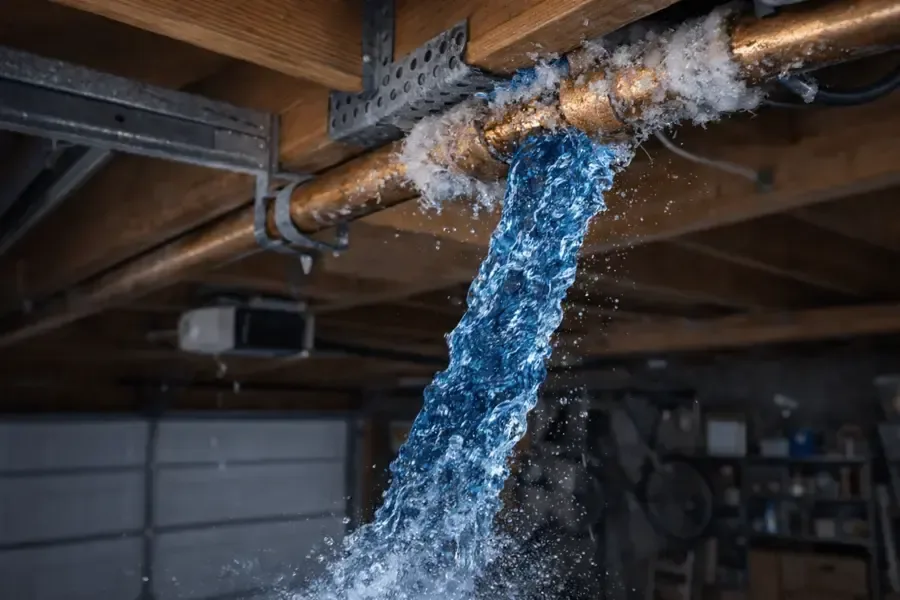
A supply pipe that splits inside a house sends water through walls, ceilings and floors at the pressure of the whole system. The first move is the shutoff, and every step after it depends on how fast the flow is stopped.
Key takeaways
- Find the main water valve before anything else and close it fully.
- Open a faucet at the lowest point of the house so the remaining water drains out of the pipes.
- Photograph the damage, then start moving belongings out of the wet area.
- The plumber fixes the pipe, and the restoration crew removes the water and dries the structure.
- Burst pipe water starts clean, so quick extraction can save drywall and flooring.
Stop the water first
A burst pipe keeps pouring until someone closes a valve. The main valve is usually near where the supply pipe enters the house, and every household should know where it is before an emergency.
If the split is on the hot side, closing the cold inlet valve on the water heater stops the tank from refilling. Turning off the heater itself keeps the element from running dry.
- Close the main water valve by turning it fully.
- If the valve will not close, a plumber can stop the flow while the crew handles the water.
- Open a faucet at the lowest point to drain the pipes and ease the pressure.
- Turn off the water heater if the pipe feeds it, and shut power to wet outlets only if the panel is dry.
- Photograph the pipe, the wet areas and the damaged belongings.
How water service works in Selma
Water service in Selma is city-owned or leased, and City of Selma Utilities covers water, wastewater, storm water and sanitation administration. Payments are taken at City Hall, online or at a drop box.
A burst pipe shows up on the next water bill as a spike, so keep that bill with the loss records. The utility office is also where a bill question goes.
Where the water goes
Water from a split pipe follows gravity and the easiest path. It runs down inside walls, across floors and through ceilings below.
Selma had 3,943 households in 2020, and 45.4 percent of them had children under 18. In a busy house, a leak can run in a wall or cabinet for a while before anyone notices, so the wet area is often wider than the first puddle.
A split in an attic or an upstairs wall rains down through the ceiling and takes insulation with it. The lower floor can be wetter than the room where the pipe broke.
- Wall cavities fill and wick water upward through drywall.
- Ceilings below an upstairs pipe sag and stain.
- Cabinet bases and flooring soak up water along the walls.
- Water can travel to the next room beneath baseboards.
Opening walls and ceilings
Wet drywall hides wet insulation and framing. The crew uses a moisture meter and a thermal camera to find the wet sections, then opens only what is needed.
Ceilings
A ceiling that bulges is opened at its lowest point so the water can drain. Sagging sections are cut out and the insulation above is removed.
Walls and floors
Drywall is cut above the wet area, and baseboards come off so the wall base can dry. Flooring that trapped water, such as laminate or vinyl plank, is often lifted.
Cabinets and built-ins
Kitchen and bath cabinets sit on the floor against the wall, so toe kicks and back panels soak first. The crew pulls the kick plates and checks the cabinet backs with a meter before deciding what stays.
Extraction and drying
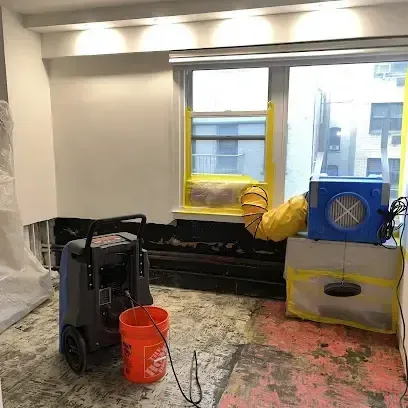
Pumps and wands pull standing water off the floors first. Then dehumidifiers and air movers dry the cavities and framing while readings are taken at each visit.
Water from a supply pipe begins as clean water, so many materials can be dried and kept. That is true only for a short window, because water that sits collects contaminants and the category changes.
Water from a supply pipe begins as Category 1. After it has soaked into building materials and sat, it can move to Category 2, which changes what can be saved.
Hardwood and engineered floors cup as they dry, so the crew may use drying mats and slow the process to protect them. Quick extraction is what gives those floors a chance.
- Standing water is removed before the equipment goes in.
- Wet insulation is removed and replaced.
- Framing is dried to within 2 to 4 points of a dry reference.
- Readings continue until the numbers show a dry structure.
The plumber and the restoration crew
The two trades have different jobs, and they work best in a set order. The plumber repairs the pipe, and the restoration team handles the water and the drying.
Booking both together keeps the house from sitting wet while one waits for the other.
A pressure check after the repair shows whether the new joint holds. It is much cheaper to find a weeping fitting before the wall is closed than after.
- Stop the water, then call a plumber to fix the pipe.
- Call a restoration team to extract and start drying while the plumber works.
- Confirm the repair holds under pressure before walls are closed.
- Keep the readings and photographs for the insurer.
Documenting the loss
A burst pipe is usually covered when it is sudden, but the details depend on the policy. Photographs, the plumber's invoice and the moisture readings tell the story.
The Selma burst pipe pages and Selma water extraction pages explain each stage, and the burst pipe water damage overview covers the wider area. The Selma water damage pages list every service.
- The failed section of pipe, if the plumber removes it.
- The plumber report and invoice.
- Dated photographs of the damage and the repair.
- The restoration crew readings log.
Questions
Where is the main water valve in a house?
It is usually near where the supply pipe enters the house, often in a garage, utility room or outside wall. Every household should locate it before a leak.
Should I drain the pipes after shutting off the water?
Opening a faucet at the lowest point lets the remaining water run out and eases pressure. It also limits how much more water escapes at the break.
Is water from a burst pipe dirty?
It begins as clean supply water. If it sits on floors and in walls it collects contaminants, so fast extraction keeps it clean.
Does homeowners insurance cover a burst pipe?
Many policies cover sudden pipe failures, though terms differ. Read the policy and ask the insurer what is included.
How do I know the walls are dry?
Moisture readings on the drywall and framing, compared to a dry reference, tell the truth. A wall can feel dry and still hold moisture inside.
How much of the wall will be cut out?
Only the section the meter shows as wet, plus a margin of dry material for a clean edge. The crew marks the cut on the wall before it starts.