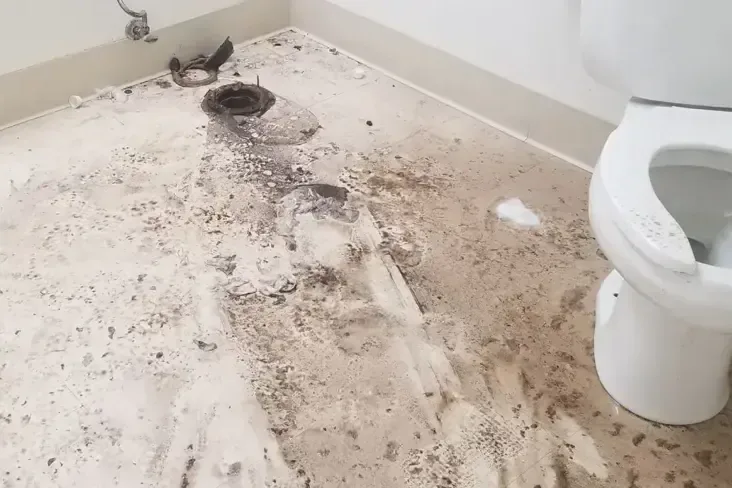
A backup shows up as gurgling fixtures, a tub that fills when the washer drains or a toilet that rises instead of flushing. In a Cibolo home the sewer path runs through several hands, and the habits that clog it start inside the house.
Key takeaways
- Sewage water is Category 3 from the start, so no one should wade through it or wipe it up by hand.
- Wipes sold as flushable, disinfecting wipes, hand sanitizing wipes, cooking oil and grease clog sewers and belong in the trash.
- The cleanup runs in order: containment, extraction, removal of porous materials, disinfecting and then drying.
- Anything porous that touched sewage is removed, not dried and kept.
- Water and sewer charges can come from more than one office, so keep every bill with the loss records.
How sewage leaves the house and reaches the plant
The City of Cibolo is the retail wastewater provider. The Cibolo Creek Municipal Authority, called CCMA, treats the city wastewater at the Odo J. Riedel Regional Water Reclamation Plant in Schertz.
The billing picture changed in November 2025: Green Valley Special Utility District now puts the sewer charge on its customers' water bills, while the City remains the sewer provider and keeps billing solid waste and drainage fees. A bill from one office does not say which office runs the sewer, so a household keeps all of them.
The route matters because a blockage in the home pipe and a blockage in the street main behave differently. A single backed-up house points to the home, while several neighbors reporting the same problem point to a larger blockage.
What clogs a home drain
CCMA says baby wipes, even those labeled flushable, disinfecting wipes, hand sanitizing wipes, cooking oil and grease clog the sewer system and belong in the trash. The same materials clog the pipe inside a home before they ever reach the street.
- Wipes do not break down the way toilet paper does, so they bunch up at bends and joints.
- Cooking oil and grease cool and harden inside the pipe, and they catch whatever passes by.
- Paper towels, cotton swabs and feminine products add to the same mass.
- A drain that runs slowly for weeks is often a clog still forming.
Signs of a backup
A single slow sink points to a local clog. A backup is different: water comes up in the lowest fixture, usually a tub, shower or floor drain, when water goes down somewhere else.
Gurgling after a flush or a bubbling toilet when the washer drains are common warnings. A sewage odor in a bathroom is another.
Stop using water the moment a backup starts, because every flush and every load of laundry adds more to the problem.
- More than one fixture is slow or gurgling at the same time.
- Water appears in a tub or floor drain when the washer runs.
- A toilet fills, rises or bubbles when another fixture drains.
- A sewage smell comes up from a drain.
Why a backup is Category 3
Sewage carries bacteria, viruses and parasites, so it is Category 3 from the moment it leaves the pipe. The industry standard, IICRC S500, treats it as grossly contaminated no matter how small the spill looks.
That is why a backup is not a do-it-yourself mop job. Skin contact, splashing and airborne spray all spread contamination to rooms that stayed clean.
- Bacteria and viruses spread through skin contact and splashes.
- Spray from an overflowing fixture reaches walls, cabinets and ceilings above it.
- Children and pets track contamination into dry rooms without anyone noticing.
- Odor is a poor test, because a house can smell clean while surfaces are still contaminated.
The cleanup sequence
A backup cleanup follows a fixed order so contamination does not spread. Each step prepares the one after it.
Containment and extraction
The crew seals the affected area with plastic sheeting and may run an air scrubber. Then pumps and wands remove the standing sewage water.
Removal and disinfecting
Carpet, pad, low drywall, insulation and cabinet toe kicks that sat in sewage are removed and bagged. Hard surfaces are cleaned, then treated with an antimicrobial left to work for its full contact time.
Belongings that sat in the water are sorted. Hard items are cleaned and disinfected, soft items such as stuffed toys and clothing on the floor are usually discarded, and photographs are taken before anything is thrown out for the insurer.
- Porous materials that touched sewage are discarded, not saved.
- Framing is cleaned and treated before it is dried.
- Air is filtered while the work runs.
Drying
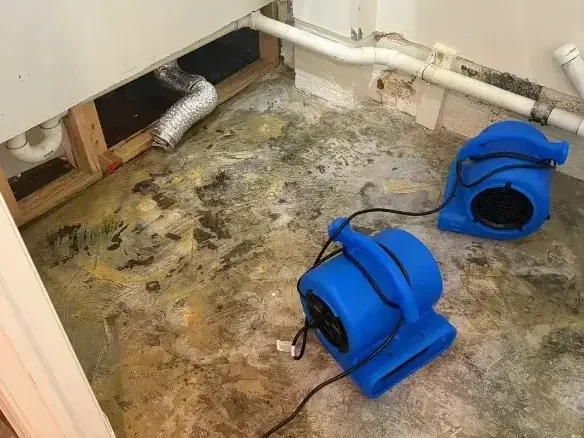
Only after cleaning does drying begin, with dehumidifiers and air movers working until readings reach the dry reference.
Because the structure was exposed to contaminated water, final readings and surface checks come after cleaning, not before. The crew photographs the cleaned surfaces so the record shows the work.
Records and bills to keep
A sewage backup often involves several parties: the household, the plumber and an insurer. Keep the photographs, the plumber's report and every utility bill from the period of the loss.
Some policies cover sudden backups only with an added endorsement. Reading the policy before the claim avoids surprises.
- Photographs of the backup and the damaged materials.
- The plumber's report on what caused the clog.
- Utility bills from before and after the loss.
- The restoration team's moisture readings and equipment log.
Keeping drains clear
Most clogs begin in the kitchen and bathroom. A few habits keep them from becoming a backup.
For the work itself, see Cibolo sewage backup cleanup, Cibolo water extraction and the sewage backup cleanup overview for the whole area. The full list of services covers the rest.
Disposal habits are the cheapest protection. A small container for cooking oil near the stove and a lidded trash can in the bathroom make the habit easy to keep.
- Put wipes of every kind in the trash, even those labeled flushable.
- Pour cooking oil and grease into a can, then into the trash.
- Scrape plates before rinsing and use a sink strainer.
- Call a plumber when a drain stays slow after a plunge.
Questions
Can I clean up a small sewage spill myself?
A tiny spill on a hard surface can be handled with gloves, boots and a disinfectant, but anything that reached carpet, drywall or more than one room needs a trained team.
What do I do first when a drain backs up?
Stop using water in the house, keep children and pets away from the affected room and photograph the damage. Then call a plumber for the clog and a restoration team for the cleanup.
Why do flushable wipes cause clogs?
They are made to hold together when wet, so they do not break apart in the pipe. CCMA lists them with other wipes that belong in the trash.
Is a backup covered by homeowners insurance?
Many policies need a sewer or drain backup endorsement. The written policy is the thing to check before filing.
How long until the house is safe again?
When contaminated materials are out, surfaces are disinfected and the structure is drying toward the reference. The crew explains which rooms are ready as the work moves along.
Who clears the clog that caused the backup?
A plumber clears the clog in the house pipe, and a restoration team handles the cleanup. The two jobs are separate, and both should be recorded for the insurer.