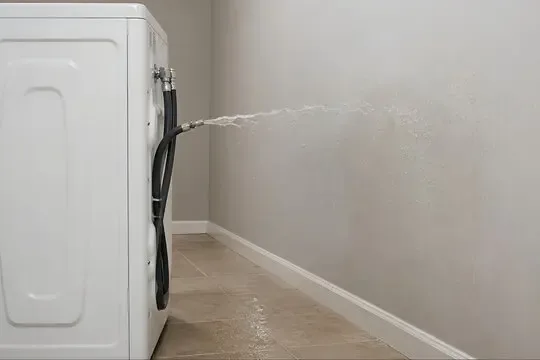
A washer supply hose can split while the machine sits in a closet or utility room, and the water runs for as long as nobody is home. In a rented house the question of who acts first matters as much as the leak itself.
Key takeaways
- Close the washer valves or the main water valve first, and stay clear of outlets near the water.
- A tenant sends the landlord written notice with photographs right away, and the landlord arranges extraction and repairs.
- Water from a supply hose is clean at first, but it turns into a bigger problem the longer it sits in flooring and walls.
- Laundry rooms sit beside hallways and bedrooms, so the wet area is usually larger than the puddle.
- Moisture readings, not a dry-looking floor, decide when the drying is over.
Why washer hoses fail
A washer hose sits under constant pressure behind a machine that vibrates every cycle. Rubber hoses bulge, crack near the connectors and eventually split.
Because the machine hides the connection, a slow weep can run for weeks before anyone sees a damp spot.
Water pressure and mineral sediment wear the rubber from the inside over time. A hose that looks fine from the front may be cracked where it meets the valve at the back.
- Bulges, cracks or rust on the hose connectors are early signs.
- A hose that has never been replaced is a candidate for replacement.
- Braided stainless hoses are less likely to split than plain rubber ones, though they are not leakproof.
- Valves left open when the household is away keep the hose under pressure the whole time.
What the numbers say about Cibolo rentals
In 2020, 83.5 percent of occupied homes in Cibolo were owner-occupied and 16.5 percent were rented, out of 10,488 housing units counted in the Census. A 2014 survey put about 93 percent of the housing stock in single-family homes.
That mix means a rental in Cibolo is usually a whole house with its own laundry connections, not a unit in a large complex. When a hose fails, the tenant and the landlord are dealing with a full house of floors and walls.
Owner-occupied homes are the large majority, so a leaking hose in the city is more often an owner problem than a rental one. In a rented house the same leak splits into two sets of responsibilities, one for the building and one for belongings.
First steps for a tenant
The first job is to stop the water. Close the two valves behind the washer, or the main water valve if the valves are stuck.
Then document the damage before anything is moved. Photographs with the date on them matter if there is a later dispute.
If water has reached carpet in another room, ask the landlord to send a restoration team right away. Wet carpet pad holds water against the subfloor for days.
- Shut the washer valves or the main valve.
- Photograph the hose, the floor, the walls and any belongings that got wet.
- Send written notice to the landlord or property manager right away, by text or email so there is a record.
- Move belongings off the wet floor, but leave damaged building materials in place for inspection.
- Ask the landlord who will arrange extraction, and keep copies of every message.
What the landlord arranges
The landlord owns the building, so extraction and drying of floors and walls normally fall to the landlord or the landlord's insurer. The lease sets out what each side is responsible for.
A prompt response keeps the loss small. Delays let water soak into flooring layers and the base of walls.
- Call a restoration team to extract water and dry the structure.
- Replace the failed hose and check the other connections.
- Tell the property insurer about the loss.
- Keep the tenant informed about which rooms are off limits during drying.
What gets wet around a laundry room
Water from a hose spreads the way water always does: down to the lowest point and out to the nearest open flooring. A laundry room next to a hallway or a bedroom sends water under walls and into other rooms.
Flooring
Vinyl and laminate trap water underneath, so the surface looks fine while the subfloor stays wet. Carpet in an adjoining room wicks water from the pad outward.
Walls and cabinets
The bottom of a wall soaks up water like a wick. Baseboards, drywall and the bottom of any cabinet nearby are checked with a moisture meter.
How the structure is dried
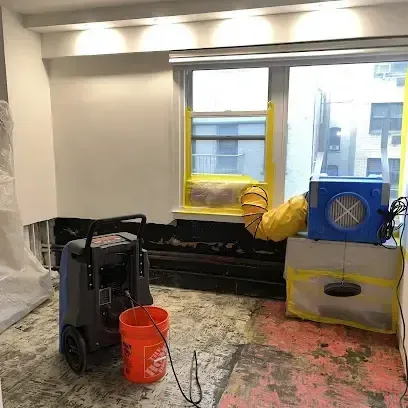
The extraction crew pulls the standing water first, then lifts wet pad and trim as needed. Dehumidifiers and air movers run in the affected rooms while readings are taken each visit.
Water from a supply hose starts clean, so many materials can be dried and kept. That advantage fades the longer the water sits, which is why quick action keeps the repair smaller.
In a rental, a dry-out is easier to explain when the readings are shared. Photographs of the equipment and the readings log give the tenant and the landlord the same facts.
- Drying equipment stays until readings reach the dry reference.
- Baseboards are removed so the wall base can dry from both sides.
- Wet carpet pad is removed, and the carpet is dried or replaced depending on the readings.
Preventing the next leak
A few small steps cut the risk. Replacing the hoses on a regular schedule and closing the valves on trips are the easiest.
The drying time estimator gives a rough picture of how long a dry-out can take, and the Cibolo appliance leak cleanup and Cibolo water extraction pages describe the work in detail. The Cibolo service pages list the rest.
- Swap rubber hoses for braided stainless ones.
- Close the washer valves when leaving for several days.
- Pull the machine out once a year and look at the hoses and the floor behind it.
- Put a drain pan under the machine if it sits above living space.
Questions
Who pays when a washer hose leaks in a rental?
It depends on the lease and the cause. The landlord usually pays for the building and the tenant for personal belongings, so both should read the lease and notify their insurers.
Should a tenant call the restoration company directly?
Most leases route repairs through the landlord, so send written notice first. In an emergency the tenant can stop the water and document the damage while waiting for a response.
Is water from a washer hose dirty?
It starts as clean supply water, which makes drying more likely to save materials. Water that sits can collect contaminants from the floor, so speed still matters.
How do I know the floor is dry?
A dry-looking floor can hide wet subfloor. A moisture meter reading compared against a dry spot elsewhere in the house is the real test.
Do renters need a renter's policy for this?
A renter's policy covers personal belongings, not the building. Without it, a tenant may have to replace damaged belongings at their own cost.
What if the landlord is slow to respond?
Keep sending written notice, take dated photographs and stop further damage where possible. The lease and Texas repair rules set the next steps, and a tenant who is unsure can ask a tenant rights group or an attorney.